
Ingress Protection Testing Explained
IEC 60529, NEMA 250, UL 50E, ISO 20653, MIL-STD and the Real Origin of IP Test Equipment Ingress Protection Testing
When engineers or laboratories say they need “IEC 60529 test equipment,” the statement often carries a simplified assumption: that ingress protection testing is defined by a single standard.
In reality, the global ecosystem of ingress protection testing is considerably more complex.
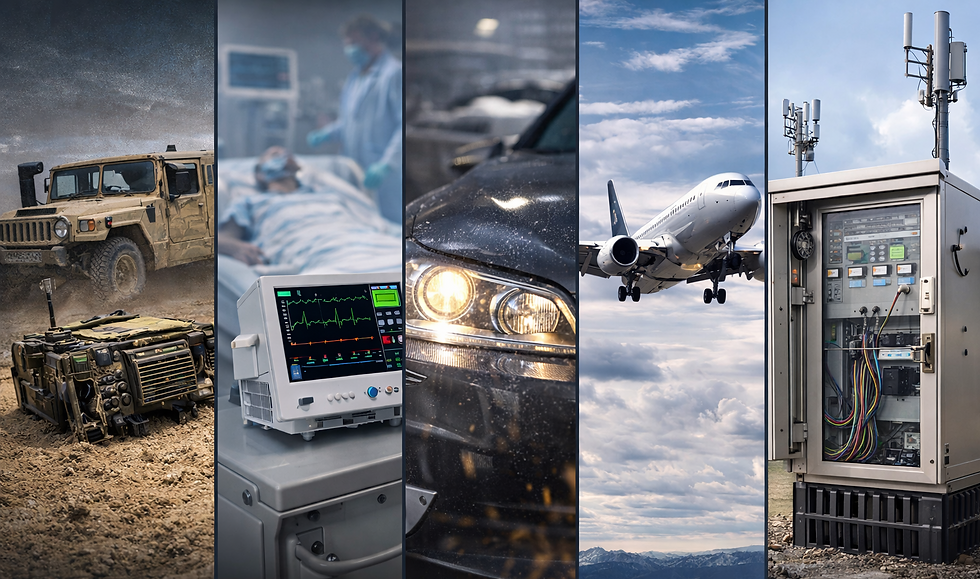
Most technical standards do not develop their own environmental test procedures from scratch. Instead, they reference existing methods developed by other organizations. Over decades this practice has created an interconnected network of standards issued by institutions such as the International Electrotechnical Commission (IEC), the International Organization for Standardization (ISO), the National Electrical Manufacturers Association (NEMA), Underwriters Laboratories (UL), the U.S. Department of Defense, as well as telecommunications and aerospace standards bodies.
Because of this cross-referencing, the laboratory equipment used today in ingress protection testing—dust chambers, spray rigs, drip apparatus, jet nozzles and immersion tanks—often originates in one standard but is referenced by many others.
For engineers, certification laboratories and manufacturers selecting test systems, understanding this network is essential.
🌍 The IP Code: the global language of enclosure protection
The most widely recognized ingress protection classification system is the IP Code defined by IEC 60529. This standard introduced a universal way to describe how well an enclosure protects against the entry of solid objects and water.
An IP rating consists of two digits. The first describes protection against solid objects and access to hazardous parts, while the second describes resistance to water ingress. Ratings such as IP20, IP54, IP65 or IP67 are now widely used across industries ranging from consumer electronics to industrial equipment.
Although IEC 60529 defines both the classification system and the associated laboratory tests, the physical test equipment used in ingress protection testing often predates the standard itself or was developed alongside other environmental testing programs.
What IEC 60529 effectively did was consolidate existing environmental simulation practices into a globally harmonized framework.
💧 From dripping water to immersion: the core laboratory methods
The test procedures defined in IEC 60529 translate into several families of laboratory equipment that now form the backbone of ingress protection testing facilities around the world.
One of the most straightforward procedures is drip testing, used for the IPX1 and IPX2 classifications. These tests simulate vertically falling water that may result from condensation, leakage or minor environmental exposure. In practice, laboratories perform these tests using drip boxes equipped with calibrated water distribution systems and adjustable specimen tables, allowing controlled exposure of electrical products, consumer devices or medical equipment.
Spray testing represents a more demanding scenario. The IPX3 and IPX4 tests simulate water splashing from multiple directions, typically representing rain exposure or water projected by surrounding equipment. Laboratories commonly perform these tests using oscillating tube apparatus or calibrated spray nozzle systems capable of directing water toward the enclosure from varying angles. Such tests are frequently applied to outdoor lighting equipment, telecommunications hardware, industrial control panels and electronic enclosures.
At higher protection levels, IEC 60529 specifies jet tests corresponding to the IPX5 and IPX6 classifications. These procedures simulate powerful water jets typical of washdown environments in industrial facilities. The standard requires specific calibrated nozzles—6.3 millimeters for IPX5 and 12.5 millimeters for IPX6—along with precise control of water flow rate, pressure, distance and exposure time. These tests are widely used to evaluate equipment intended for outdoor infrastructure, manufacturing plants and heavy-duty installations.
Beyond water jets, immersion testing evaluates whether water can penetrate an enclosure when submerged. The IPX7 and IPX8 classifications require controlled immersion of the test specimen in water tanks or pressure vessels where depth and duration can be precisely regulated. Such procedures are common for sensors, marine electronics and industrial instrumentation where accidental immersion may occur during service.
Protection against particulate ingress is evaluated using dust chambers designed to expose equipment to circulating fine powders. For IP5X and IP6X classifications the enclosure is placed inside a chamber where dust concentration, airflow and exposure duration are carefully controlled, sometimes combined with a vacuum applied to the specimen to encourage particle penetration. The design of dust chambers remains one of the most technically debated aspects of ingress protection testing because different standards specify different dust types, airflow regimes and chamber dimensions.
🏭 North American enclosure protection: NEMA and UL standards
While IEC 60529 established the globally recognized IP classification system, North America historically developed a different framework for enclosure protection.
NEMA Standard 250, issued by the National Electrical Manufacturers Association, classifies enclosures using Type designations rather than numeric ingress ratings. Enclosures such as NEMA Type 1, Type 3R, Type 4 or Type 4X are defined primarily by their environmental performance in specific installation conditions rather than by strictly quantified ingress levels.
Despite this conceptual difference, the physical testing methods used to verify NEMA ratings often rely on equipment similar to that used in IEC ingress protection testing.
Detailed procedures are frequently defined in UL standards—particularly UL 50 and UL 50E—which describe environmental tests including rain exposure, hose-directed water testing, icing resistance and corrosion performance. One of the best-known procedures is the hose-directed water test used for NEMA Type 4 and 4X enclosures, where a high-flow one-inch hose nozzle is directed at seams and joints to simulate industrial washdown conditions.
🚗 Automotive, military and aerospace environmental testing
Ingress protection testing extends far beyond electrical enclosures and industrial equipment.
In the automotive industry the most relevant standard is ISO 20653, which adopts the IP concept but introduces additional severity levels tailored to vehicle operating environments. Classifications such as IP6KX and IPX9K represent extreme conditions including high-pressure and high-temperature water jets intended to simulate vehicle washing systems or road contamination. IPX9K testing requires specialized spray chambers capable of delivering heated water at high pressure from multiple directions.
Military equipment must withstand even harsher environmental conditions, which led the U.S. Department of Defense to develop the comprehensive MIL-STD-810 environmental testing standard. Rather than focusing strictly on ingress classification, MIL-STD-810 evaluates equipment performance under realistic operational stresses. Among its procedures are rain exposure, sand and dust testing, immersion, humidity exposure and salt fog corrosion testing. Although the objectives differ from IEC classification tests, the underlying environmental simulations—water exposure, airborne particles and immersion—remain technically related.
Aerospace testing follows a similar philosophy. The RTCA DO-160 standard used for airborne electronic equipment includes procedures for humidity exposure, water spray, sand, dust and temperature extremes. While not formally an ingress protection classification system, DO-160 relies on environmental durability tests conceptually similar to those found in both military and industrial testing programs.
📡 Telecommunications and product safety standards
Telecommunications infrastructure represents another sector where ingress protection is critical. Outdoor cabinets, fiber distribution systems and base station enclosures must operate reliably under rain, wind-driven water, dust and temperature cycles. As a result, telecom equipment is often required to achieve protection levels equivalent to IP55 or IP65, or the North American equivalents NEMA Type 4 or Type 4X.
Testing laboratories evaluating telecom equipment therefore commonly use the same spray rigs, dust chambers and jet testing systems employed in IEC ingress protection testing.
Many product safety standards also reference ingress protection testing without defining their own environmental procedures. Medical electrical equipment governed by IEC 60601, for example, must demonstrate adequate protection against liquid ingress to ensure patient safety. Household appliance standards such as IEC 60335 impose similar requirements for products including washing machines, kitchen equipment and outdoor appliances. In most cases these standards simply refer to IEC 60529 for the detailed test methods.
⚙️ Why one test machine often serves many standards
One of the most important practical realities of ingress protection testing is that laboratory equipment rarely belongs to a single standard.
The same drip apparatus used for IEC IPX1 testing may also be used in appliance safety certification. Spray rigs designed for IPX4 testing are often employed in UL rain exposure procedures. Jet nozzles specified for IEC IPX5 and IPX6 tests may also be used for NEMA washdown simulations. Dust chambers developed for IP6X classification frequently support MIL sand and dust testing, while high-pressure spray chambers originally developed for automotive IPX9K testing illustrate how specialized equipment evolves from specific industry needs.
Standards organizations intentionally reuse existing test methods whenever possible. This approach ensures consistency between laboratories, improves reproducibility and significantly reduces certification costs for manufacturers.
For this reason product standards often include a simple instruction stating that ingress protection shall be determined according to IEC 60529 or another referenced procedure.
Understanding the standards network
Selecting ingress protection test equipment therefore requires understanding the chain of standards involved in a product certification program.
The process typically begins by identifying the applicable product standard and determining the required ingress protection level. Engineers must then verify which reference standard defines the laboratory procedure and review any additional conditions specified by the product standard itself. Only after this analysis can the appropriate test equipment be selected.
Ingress protection testing is therefore not defined by a single document but by a global ecosystem of technical standards that includes IEC 60529, NEMA 250, UL 50 and UL 50E, ISO 20653, MIL-STD-810 and a range of aerospace, telecommunications and product safety specifications.
Once this framework is understood, the apparent complexity of ingress protection testing reveals itself as a coherent system built on shared environmental simulation methods and decades of international engineering collaboration.


Comments